
Multilingual SEO for Belgium: How to Rank in French, Dutch & English
Belgium's unique trilingual market demands a strategic approach to multilingual SEO. Learn how to optimize your website for French, Dutch, and English audiences while navigating the complexities of Belgian search behavior.
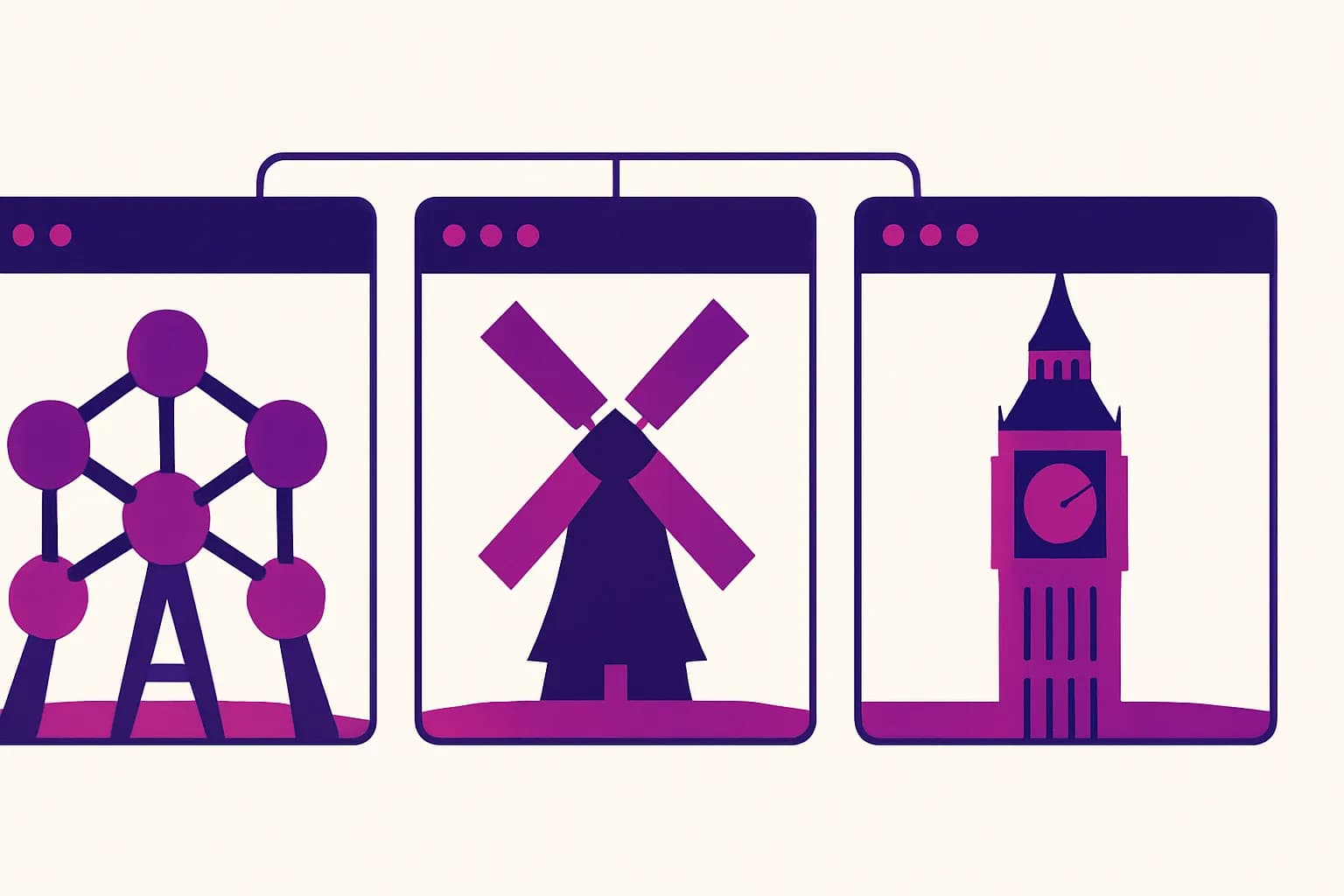
Belgium's multilingual landscape presents both a challenge and an opportunity for businesses looking to establish a strong online presence. With Dutch spoken by approximately 60% of the population in Flanders, French by 40% in Wallonia and parts of Brussels, and English increasingly used in the capital's international community, multilingual SEO isn't optional—it's essential. Getting it right means tripling your addressable market; getting it wrong means wasting resources on content that Google can't properly index or users can't find.
This guide walks through the strategic and technical foundations of multilingual SEO tailored specifically to Belgium's unique market dynamics, from URL structure and hreflang implementation to localized content strategy and regional link building.
Why Belgium Needs a Specialized Multilingual Approach
Belgium isn't simply a bilingual or trilingual market—it's a complex mosaic of language communities with distinct search behaviors, media consumption patterns, and cultural preferences. A French speaker in Liège doesn't search the same way as a French speaker in Paris, and Belgian Dutch (Flemish) includes terminology and expressions that differ from standard Netherlands Dutch.
Google treats Belgian language variants as part of broader language groups (fr-BE falls under French, nl-BE under Dutch), but Belgian users exhibit strong regional loyalty. They prefer .be domains over .fr or .nl equivalents, and they respond better to content that acknowledges local context—references to Belgian institutions, pricing in euros with Belgian conventions, and awareness of regional holidays and cultural touchpoints.
The Brussels-Capital Region adds another layer: officially bilingual (French and Dutch) but increasingly multilingual, with significant English usage among expats, EU institutions, and international businesses. For many service providers, Brussels represents a distinct third market requiring its own content strategy beyond simple language translation.
Successfully navigating Belgian multilingual SEO requires treating each language not as a translation exercise, but as a distinct market entry strategy with its own keyword research, content development, and link acquisition.
Technical Foundations: URL Structure and hreflang
The technical architecture of your multilingual site forms the foundation for everything else. Belgian businesses typically choose between three URL structures, each with trade-offs:
| Structure | Example | Advantages | Disadvantages |
|---|---|---|---|
| Subdirectories | example.be/nl/, example.be/fr/ | Consolidates domain authority, easiest to manage, cost-effective | Less separation between languages if needed |
| Subdomains | nl.example.be, fr.example.be | Clear separation, allows distinct hosting/CMS if needed | Splits domain authority, more complex setup |
| Separate domains | example-nl.be, example-fr.be | Maximum separation for distinct brands per language | Most expensive, requires separate link building, rarely necessary |
For most Belgian businesses, subdirectories on a single .be domain offer the best balance of SEO value and operational simplicity. Once you've chosen your structure, proper hreflang implementation is non-negotiable. Hreflang tags tell Google which language version to serve to which users, preventing duplicate content issues and ensuring French speakers see French pages, Dutch speakers see Dutch pages, and so on.
Implementing hreflang for Belgium
A typical Belgian implementation includes hreflang tags for each language variant, including a fallback (x-default) for users whose language preference doesn't match any of your versions:
<link rel="alternate" hreflang="nl-BE" href="https://example.be/nl/page/" />

<link rel="alternate" hreflang="fr-BE" href="https://example.be/fr/page/" />

<link rel="alternate" hreflang="en-BE" href="https://example.be/en/page/" />

<link rel="alternate" hreflang="x-default" href="https://example.be/nl/page/" />
These tags must appear on every page, be reciprocal (each language version must link to all others including itself), and use absolute URLs. Common mistakes include missing self-referential tags, broken cross-links when content exists in only some languages, and incorrect language codes. A technical SEO audit can identify and resolve these issues before they impact rankings.
Localized Keyword Research and Content Strategy
Direct translation is the enemy of effective multilingual SEO. A keyword that performs well in France or the Netherlands won't necessarily work in Belgium, and literal translation from one Belgian language to another ignores how people actually search.
Start with separate keyword research for each language market. Belgian French speakers might search for "gsm" (mobile phone) rather than "téléphone portable," while Belgian Dutch uses distinct terms compared to Netherlands Dutch. Regional vocabulary, product names, and even syntax patterns differ enough to warrant independent research for each language.
Your on-page optimization and content strategy should account for search intent differences across languages. A Flemish B2C audience might prefer informal, benefit-driven content, while a Walloon professional audience might respond better to formal, detailed explanations. English content in Belgium often targets a more international, higher-education audience with different expectations around tone and depth.
Content parity—having the same pages in all languages—is ideal but not always necessary. Some topics resonate more strongly with one language community than another. E-commerce sites often discover that certain product categories perform better in Flanders while others do better in Wallonia. Let data guide which content you prioritize for translation and localization, rather than assuming perfect 1:1 parity.
Localization Beyond Translation
True localization extends beyond words to encompass cultural context, visual elements, and user experience. This includes:
- Date and number formats: DD/MM/YYYY format, European decimal comma conventions
- Currency and pricing: EUR € with Belgian pricing psychology (€9,99 vs €10)
- Contact information: Belgian phone number formats, local business hours
- Legal compliance: References to Belgian regulations, consumer rights, privacy laws in appropriate language
- Visual content: Images featuring Belgian locations, diverse representation of linguistic communities
- Social proof: Testimonials and case studies from Belgian clients in the appropriate language
These details signal to both users and search engines that your content is genuinely targeted to the Belgian market, not simply repurposed from another country's site.
Building Authority Across Languages
Link building for multilingual sites requires separate efforts for each language version. A strong backlink profile for your Dutch pages doesn't automatically benefit your French pages, and vice versa. Google evaluates authority at the page and directory level, meaning each language section needs its own link acquisition strategy.
Focus on language-relevant link sources: Flemish news sites, blogs, and directories for your Dutch content; Walloon and Brussels-based French sources for your French content; international and Brussels-focused English sources for your English content. Link building tactics that work include:
- Regional PR and digital media outreach to language-specific news sites and industry publications
- Content partnerships with complementary businesses serving the same language market
- Local directories and chambers of commerce in each region (Voka for Flanders, UWE for Wallonia, etc.)
- Language-specific content marketing that naturally attracts links from that community
- Academic and institutional links from Belgian universities and organizations, often available in multiple languages
Don't forget about local SEO integration. If your business has physical locations in different regions, create location-specific pages in the appropriate language(s). A store in Antwerp should have a robust Dutch page (and potentially English for international visitors), while a Liège location needs French (and potentially German for the East Cantons).
Monitoring Performance and Ongoing Optimization
Multilingual SEO requires language-segmented analytics and reporting. Set up separate tracking for each language directory in Google Search Console and your analytics platform. Monitor organic performance metrics independently: what works in one language market might fail in another, and you need granular data to understand where to invest resources.
Key metrics to track by language include:
- Organic traffic and user engagement (bounce rate, time on site, conversion rate) per language version
- Keyword rankings tracked separately for each language, using Belgian search locations
- Hreflang error rates and implementation health via Search Console
- Link acquisition velocity for each language section
- Content performance to identify which topics resonate in which markets
- Technical crawl health for each language directory
Belgian search behavior shifts over time as language use evolves, particularly in Brussels where multilingualism continues to increase. Regular keyword research refreshes (quarterly or bi-annually) ensure your content stays aligned with how people actually search, not how they searched when you first launched.
Consider the growing importance of GEO (generative engine optimization) for multilingual markets. AI-powered search experiences like ChatGPT, Gemini, and Perplexity are increasingly answering queries in users' preferred languages, and optimizing for these platforms requires structured, authoritative content in each language that AI models can confidently cite.
For businesses operating across Belgium's major cities—Antwerp, Brussels, Ghent, and Liège—a comprehensive multilingual SEO strategy ensures you capture demand across all linguistic communities rather than leaving entire markets underserved.
Multilingual SEO for Belgium isn't twice or three times as hard as single-language optimization—it's a fundamentally different strategic approach. But for businesses willing to invest in proper localization, technical implementation, and language-specific content and link building, the reward is access to Belgium's entire market, not just the slice that happens to speak your default language. In a country where language isn't just a communication tool but a marker of regional identity and cultural preference, getting multilingual SEO right isn't just good practice—it's essential for competitive survival.