
How Long Does SEO Take to Work? Realistic Timeline for 2026
SEO typically takes 3-6 months to show initial results, with meaningful gains appearing after 6-12 months. Learn what influences your timeline and how to set realistic expectations for your SEO campaign in 2026.
One of the most common questions business owners and marketers ask when starting an SEO campaign is: how long does SEO take to work? It's a fair question—after all, if you're investing time and budget into search optimization, you want to know when you'll see a return. The honest answer is that SEO is a medium to long-term strategy. While some changes can produce quick wins, meaningful, sustainable results typically take anywhere from three to twelve months, depending on multiple factors including your site's current state, competition, and the scope of your strategy.
Understanding realistic timelines helps you set proper expectations, avoid premature disappointment, and commit to strategies that actually move the needle. In this guide, we'll break down the typical SEO timeline in 2026, what influences how quickly you see results, and what you can realistically expect at each stage of your campaign.
Typical SEO Timeline: Month by Month
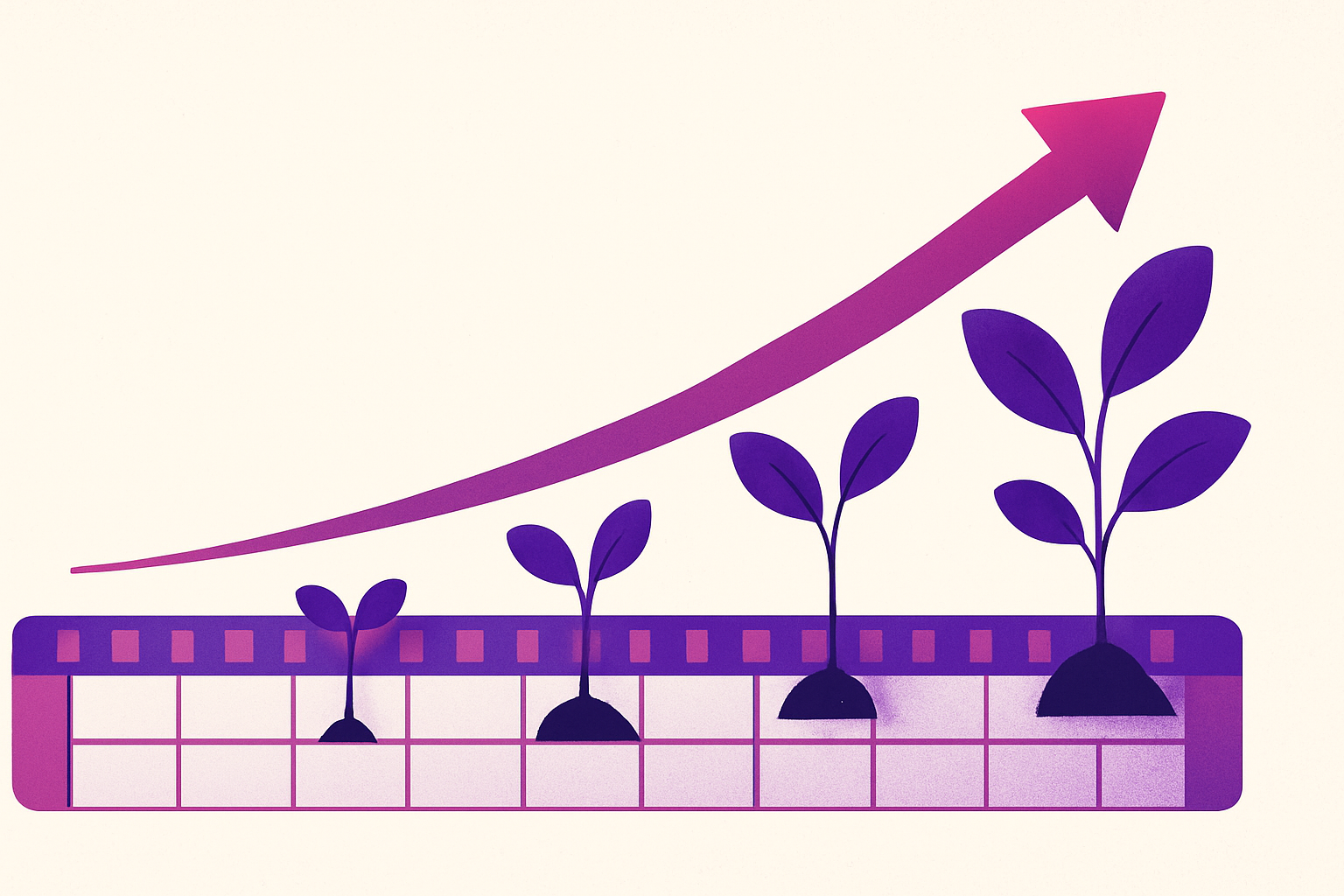
SEO doesn't follow a universal clock, but there are general patterns most campaigns follow. Here's what you can expect during the first year of a well-executed SEO strategy:
Months 0-3: Foundation and early signals. During the first three months, the focus is on technical SEO audits, fixing critical issues, optimizing existing content, and beginning content creation. You might see indexing improvements, better crawlability, and small upticks in impressions or low-competition keyword rankings. However, significant traffic growth is rare at this stage. Google needs time to crawl, index, and evaluate your changes.
Months 3-6: Initial traction. This is when many sites begin to see the first real results. Pages that were optimized or newly published start climbing in rankings, especially for long-tail and lower-competition keywords. Traffic typically grows by 10-30% if the strategy is solid. You'll also start accumulating user engagement data, which helps Google understand how visitors interact with your content.
Months 6-12: Meaningful growth. By six months, a well-executed campaign often shows measurable gains in organic traffic, keyword rankings, and conversions. Established sites with authority can see 30-100% traffic increases, while newer sites may still be building momentum. This period is critical for doubling down on what's working—scaling content, earning more backlinks, and refining on-page optimization based on performance data.
12+ months: Compounding results. SEO becomes exponentially more effective over time. Content you published months ago continues to attract traffic, backlinks accumulate, and domain authority strengthens. The longer you invest consistently, the harder it becomes for competitors to catch up. This is when SEO transitions from a cost center to a revenue driver.
Factors That Influence Your SEO Timeline
Not every website will follow the same trajectory. Several variables determine how quickly you'll see results from your SEO efforts:
Site Age and Authority
New websites face a steeper climb. Google tends to be cautious with sites that have little history, few backlinks, and no established trust signals. A brand-new domain might need 6-12 months just to build credibility, while an established site with a solid backlink profile and existing traffic can see improvements in 3-6 months. If you're working with a site that's been around for years but neglected SEO, you're in a middle ground—better than starting from scratch, but you'll still need time to reverse any technical debt or content gaps.
Competition Level
Targeting highly competitive keywords in industries like finance, legal, or e-commerce means competing against sites with massive budgets, deep backlink profiles, and years of optimization. In these niches, 12+ months is realistic for top-10 rankings on primary keywords. Conversely, if you're in a local or niche market with less competition, you might rank on page one within 3-6 months, especially when combining SEO with local SEO strategies.
Quality and Consistency of Execution
A sporadic SEO effort—publishing one blog post a month, earning a couple of backlinks, fixing a few technical issues—will produce sporadic results. Consistent, high-quality execution across technical, content, and off-page SEO is what shortens timelines. Publishing valuable content weekly, earning authoritative backlinks monthly, and continuously improving user experience signals all compound faster than intermittent efforts.
SEO is not a one-time project. It's an ongoing process where consistency and quality matter more than quick fixes. The sites that win are the ones that show up week after week, month after month.
What You Can Control to Speed Up Results
While you can't force Google to rank you overnight, you can influence how quickly you gain traction by focusing on the right levers:
Fix technical issues immediately. Slow page speeds, broken links, duplicate content, and crawl errors all delay progress. A comprehensive technical SEO audit at the start of your campaign identifies and resolves these blockers, ensuring Google can crawl, index, and rank your content efficiently.
Target low-competition keywords first. Rather than immediately chasing high-volume, high-difficulty keywords, build momentum by ranking for long-tail, lower-competition terms. These "quick wins" generate traffic faster, build topical authority, and create a foundation for tackling harder keywords later.
Earn quality backlinks early. Links remain one of the strongest ranking signals. Prioritizing link building from the start—through outreach, guest posts, digital PR, or partnerships—accelerates authority growth and helps Google see your site as credible sooner.
Optimize for user experience and Core Web Vitals. Google's algorithm increasingly prioritizes user satisfaction. Fast load times, mobile responsiveness, low layout shift, and intuitive navigation all contribute to better rankings. Sites that deliver a smooth, helpful experience tend to climb faster than those with poor usability, even if the content quality is similar.
| Action | Impact on Timeline | Typical Timeframe |
|---|---|---|
| Fix critical technical issues | High | 1-3 months |
| Publish high-quality content consistently | High | 3-6 months |
| Earn authoritative backlinks | Very High | 3-12 months |
| Optimize existing high-potential pages | Medium | 2-4 months |
| Improve Core Web Vitals | Medium | 1-3 months |
SEO vs. Other Channels: Timeline Comparison
It's helpful to compare SEO timelines to other marketing channels to understand where it fits in your broader strategy:
Paid search (Google Ads): Results are nearly instant. Turn on a campaign, and you can see clicks and conversions within hours. However, the moment you stop paying, the traffic stops. There's no compounding effect.
Social media marketing: Organic social can take months to build a following and generate consistent traffic, similar to SEO. Paid social offers faster results but, like paid search, requires continuous spend.
Email marketing: If you have an existing list, email can drive immediate traffic and conversions. Building a quality list from scratch, however, takes time—often 6-12 months for meaningful volume.
SEO: Slower to start than paid channels, but once momentum builds, organic traffic continues to flow without ongoing ad spend. Over time, SEO often delivers the best cost-per-acquisition and lifetime value of any channel, making the wait worthwhile.
For businesses that need immediate traffic, a hybrid approach works best: use paid channels for short-term results while building SEO for long-term, sustainable growth. This dual strategy ensures you're driving revenue now while investing in an asset that pays dividends for years.
Setting Realistic Expectations for 2026
In 2026, the SEO landscape continues to evolve with AI-driven search experiences, including Google's AI Overviews and conversational engines like ChatGPT and Perplexity. These shifts don't eliminate the need for SEO—they expand it. Ranking in traditional search results remains critical, but optimizing for visibility in AI-generated answers (GEO) is becoming equally important. If you're serious about future-proofing your strategy, consider investing in GEO: SEO for Generative AI alongside traditional SEO efforts.
Realistic expectations for 2026 include understanding that while technical improvements and AI integrations may speed up some processes, the core principles remain: Google (and other engines) reward sites that demonstrate expertise, authority, and trustworthiness over time. There are no shortcuts to building that credibility, but the payoff—sustainable, high-quality organic traffic—is worth the patience.
If you're just starting, commit to a minimum six-month timeline before evaluating whether SEO is "working." Track leading indicators like keyword rankings, impressions, indexed pages, and backlink growth along the way, not just traffic and conversions. These early signals show whether your strategy is on the right track, even if the big wins haven't arrived yet.
Finally, remember that SEO is never truly "done." The sites that maintain and grow their rankings are those that continue investing in fresh content, technical excellence, and user experience long after the initial gains. Treat SEO as an ongoing asset, not a one-time project, and the timeline question shifts from "when will it work?" to "how can we keep compounding results year after year?"